


A recall notice landed in a lot of inboxes this year, and "battery" plus "fire" is a phrase that gets read closely. In late 2025 and early 2026, Tesla recalled 10,500 Powerwall 2 systems in the US after the Consumer Product Safety Commission documented overheating, smoke, and fire incidents tied to certain third-party cells, and Tesla began remotely discharging affected online units while replacements were arranged [1][6]. If you own one of those units, the action is short: check the Tesla app, verify your status, and let your installer handle the swap [2].
For everyone else, the more useful question is what a 10,500-unit recall actually reveals about lithium-ion safety in 2026, and what to look for in any home battery you might buy. The short version: the headline is scary, the underlying story is reassuring, and the difference between the two comes down to chemistry, certifications, and a small computer most buyers never think about. This is general safety education, not regulatory or engineering advice; for your specific equipment, consult your installer, your local authority having jurisdiction (AHJ), or the manufacturer.
Key takeaways
- Tesla recalled 10,500 Powerwall 2 units sold November 2020 to December 2022, after the CPSC documented 22 incident reports (5 fires, 6 smoke, 11 overheating), with minor property damage and no deaths (verified as of 2026-06-18) [1][6].
- LFP (lithium iron phosphate) batteries begin thermal runaway around 270 to 300 C versus 150 to 210 C for NMC, roughly 100 C more safety margin, and release no oxygen during a failure.
- UL 9540A reached its 6th Edition on March 13, 2026, adding large-scale fire testing so propagation must be shown not to spread system to system, not just cell to cell (verified as of 2026-06-18) [3][4].
- Most major US residential batteries (including Tesla's own Powerwall 3, from 2024) now use LFP, so the 2026 safety floor is materially higher than the 2020 to 2022 cohort being recalled.
- The fastest recall check is your model and serial number against the manufacturer app and the CPSC database at cpsc.gov/Recalls (verified as of 2026-06-18).
What Happened: The Powerwall 2 Recall in Plain English
The Tesla Powerwall 2 recall covers AC battery systems sold in the US between November 2020 and December 2022, where specific third-party lithium-ion cells could fail during normal operation and generate heat that sometimes produced smoke or flame [1]. The CPSC documented 22 incident reports (5 fires, 6 smoke, 11 overheating), described the property damage as minor, and recorded no deaths [1][6]. The remedy is unusual, and it is the part worth understanding.
Because Powerwall 2 is a connected, software-controlled product, Tesla remotely discharges affected online units to remove stored energy while replacement hardware is installed, rather than asking homeowners to do anything physical to the battery [1][2]. That is a recall remedy that simply did not exist for most appliances a decade ago. A toaster recall ends with a box and a shipping label. A networked battery recall can begin with a software command that drains the risk out of the unit overnight.
The recall at a glance: a small, dated cohort with minor damage and no deaths.
| Recall detail | Value | Source |
|---|---|---|
| Units recalled (US) | 10,500 | [1][6] |
| Install window | Nov 2020 to Dec 2022 | [1] |
| Incident reports | 22 total (5 fire, 6 smoke, 11 overheating) | [1][6] |
| Injuries / deaths | None | [1][6] |
| Property damage | Minor | [1] |
| Remedy | Remote discharge of online units + hardware replacement | [1][2] |
Verified as of 2026-06-18.
A networked battery recall can begin with a software command that drains the risk out of the unit overnight.
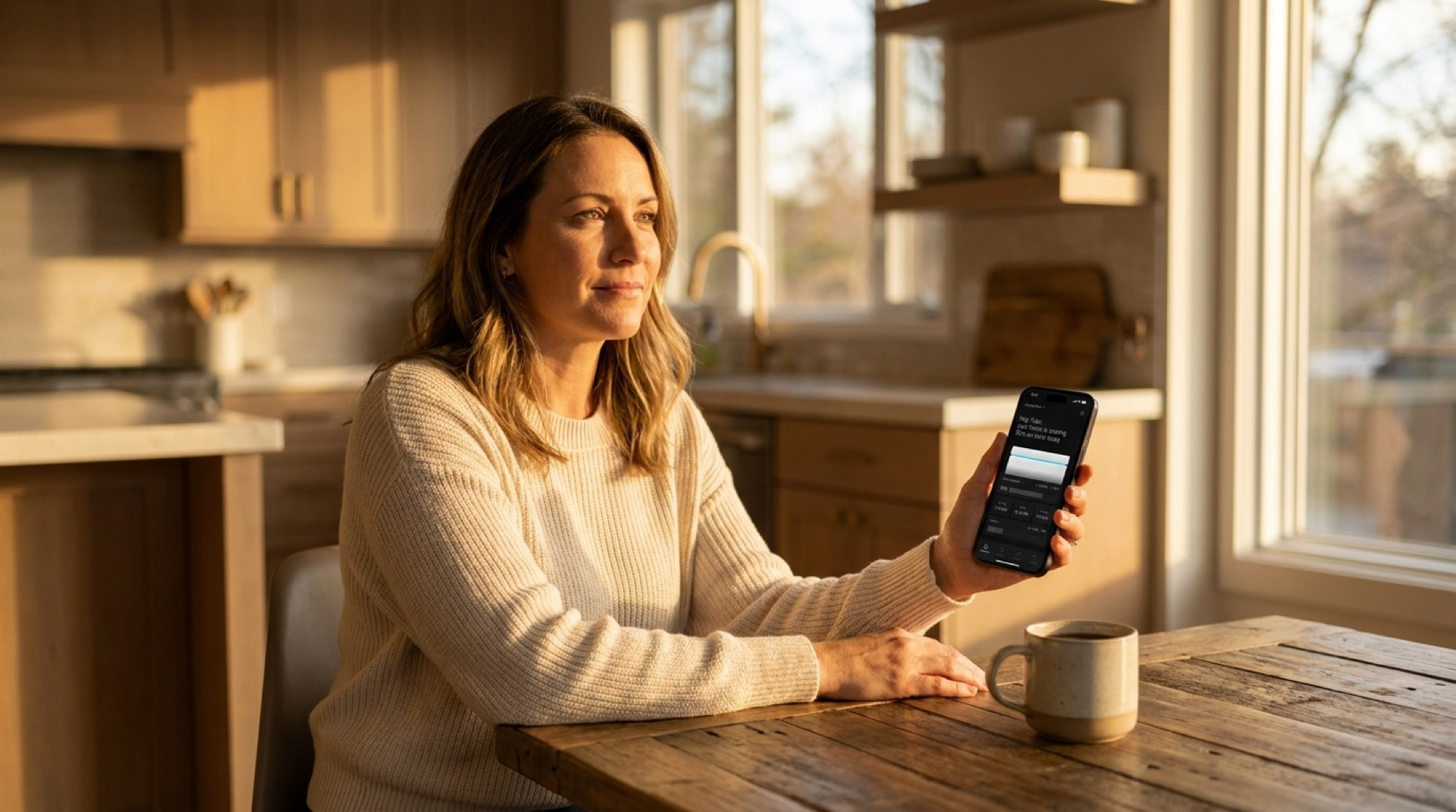
If you own a Powerwall 2 installed between 2020 and 2022, here is the action, and only this: confirm the unit is online, open the Tesla app, look for a recall notification, and contact Tesla or your installer if anything is unclear [2]. Do not open the enclosure, touch terminals, or attempt any repair yourself; let the manufacturer and a licensed professional handle the discharge and swap. If you do not own a 2020 to 2022 Powerwall 2, no action is required. That is genuinely the whole to-do list.

Why This Isn't Just a Tesla Problem
So is this a Tesla problem, or a battery problem?
The Tesla Powerwall 2 recall is tied to a third-party cell defect, but the underlying dynamics apply across brands, because the Powerwall 2 used NMC (nickel manganese cobalt) cells, the same chemistry family found in EVs and many older home batteries. The single most important industry shift is that residential batteries have moved from NMC to LFP, largely for safety. That move is what makes 2026 different from 2020.
Tesla's own Powerwall 3, launched in 2024, uses LFP, and so do current systems from FranklinWH, Enphase, SunPower, Generac, and BYD, along with most major US residential players. The Powerwall 2 era effectively ended in 2023. So a recall of 2020 to 2022 hardware is, in a real sense, the industry cleaning up an older cohort rather than confronting a problem with what is being sold today.
The Powerwall 2 era effectively ended in 2023, so this recall is the industry cleaning up an older cohort, not what ships today.
None of this means NMC is unsafe. Modern NMC packs ship with extensive battery management systems, fire-resistant enclosures, and tested mitigations, and they pass the same certifications LFP systems do. The point is narrower and more useful: the 2026 baseline safety floor sits higher than it did for 2020 to 2022 batteries. So what for you? If you are shopping now, you are shopping in a safer market than the one that produced the recalled units, before you even compare a single spec sheet.
LFP vs NMC: The Chemistry That Drives Fire Behavior
Thermal runaway is a self-reinforcing loop in which a cell generates heat faster than it can shed it, and LFP and NMC behave very differently once that loop starts. LFP (lithium iron phosphate) begins thermal runaway around 270 to 300 C, while NMC can begin around 150 to 210 C, giving LFP roughly 100 C more margin before trouble starts [7]. That margin is the headline, but the oxygen difference is the part fire crews care about.
In NMC, the cathode's metal-oxygen bond breaks down at relatively low temperatures and releases oxygen that feeds combustion, which is what makes those fires stubborn to suppress. In LFP, the phosphorus-oxygen bond stays stable to roughly 800 C, so a failing LFP cell vents steam and electrolyte rather than its own oxygen supply [7]. A fire that brings its own oxygen is a different animal than one that does not.
LFP fails cooler, slower, and without feeding its own fire.
| Chemistry | Runaway trigger (C) | Oxygen release | Peak cell-face temp (C) | Mass ejected (%) | Cycle life (cycles) |
|---|---|---|---|---|---|
| LFP | 270 to 300 | No | ~620 | 20 to 25 | ~4,000 to 6,000 |
| NMC | 150 to 210 | Yes | ~800 | 40 to 50 | ~1,500 to 3,000 |
Source: [7].
A fire that brings its own oxygen is a different animal than one that does not.
The numbers compound. LFP triggers later, peaks cooler at roughly 620 C versus 800 C for NMC, ejects less mass (20 to 25 percent versus 40 to 50 percent), and lasts two to four times as many cycles [7]. So what for you? When a 2026 spec sheet says "LFP," it is telling you the battery is designed to fail less violently and live longer, which is why it has become the residential default. For the deeper chemistry comparison, see our LFP vs sodium-ion home battery guide.

By the Numbers: LFP's Safety Margin
- ~100 C: extra temperature margin before LFP begins thermal runaway versus NMC [7].
- ~800 C: temperature LFP's phosphorus-oxygen bond stays stable to, so no oxygen is released to feed a fire [7].
- 20 to 25%: cell mass ejected during LFP runaway, versus 40 to 50% for NMC [7].
- 4,000 to 6,000: typical LFP cycle life, roughly double to triple NMC's ~1,500 to 3,000 [7].
Source: [7].
Before we get into the certifications and systems that separate a genuinely safe battery from a spec-sheet promise, take 60 seconds to pressure-test your own setup or a system you're considering.
Interactive
Will your install pass the placement basics?
A 60-second pre-screen of the NFPA 855 placement factors that cut real risk. Answer for your planned location — then bring any red flags to a licensed installer.
Bring these 7 questions to your installer
- Is it UL 9540 listed in the exact configuration you are buying?
- Has it been tested under UL 9540A (6th Edition, March 2026), with propagation results available?
- What is the cell chemistry? (LFP is the 2026 default.)
- What does the BMS monitor, and what protective actions can it take?
- Is the installer fluent in NFPA 855 (clearances, ventilation, disconnect)?
- What is the warranty for cell-level capacity retention, and the thermal-incident track record?
- Is it networked with manufacturer monitoring, including firmware updates and remote disconnect?
Educational pre-screen only — not a substitute for a licensed electrician or your authority having jurisdiction (AHJ). Based on NFPA 855 installation guidance (~3 ft clearance, ventilation, valid location, disconnect access, grounding) cited in this post. Always have a licensed professional evaluate your specific site.
The Certifications That Actually Mean Something
If chemistry is the ingredient, certifications are the inspection that proves the whole dish is safe, and three standards do the heavy lifting for home batteries in 2026. UL 9540 is the system-level safety listing that evaluates the battery, inverter, enclosure, and software as one product, and the 2024 and 2026 IRC and IFC require residential energy storage to be UL 9540 listed, which means an uncertified install fails inspection and is illegal in many jurisdictions [3]. The other two standards test how a failure spreads and how the system is installed.
UL 9540A is the thermal-runaway propagation test method whose results drive code spacing requirements, and UL Solutions published its 6th Edition on March 13, 2026, formally incorporating large-scale fire testing (LSFT) [3][4]. The practical effect is significant: propagation must now be shown not to spread system to system, not just cell to cell, which is the most consequential home-battery safety update of 2026 [4]. NFPA 855, the "Standard for the Installation of Stationary Energy Storage Systems," governs clearances, ventilation, suppression, location, and access, and was updated for 2026 [5].
Three standards, three jobs: list the system, test the failure, govern the install.
| Standard | What it tests | Level | 2026 update |
|---|---|---|---|
| UL 9540 | System safety as one product (battery, inverter, enclosure, software) | System-level listing | Required by 2024 and 2026 IRC/IFC for residential ESS [3] |
| UL 9540A | Thermal-runaway fire propagation | Test method (drives code spacing) | 6th Edition published Mar 13, 2026, adds large-scale fire testing (LSFT) [3][4] |
| NFPA 855 | Installation: clearances, ventilation, suppression, location, access | Installation standard | Updated for 2026 [5] |
Verified as of 2026-06-18.
Propagation must now be shown not to spread system to system, not just cell to cell, the most consequential home-battery safety update of 2026.
So what for you? When you shop, confirm two things in writing: that the system is "UL 9540 listed" in the configuration you are buying, and that UL 9540A test results are available. Then make sure your installer is fluent in NFPA 855, because a certified battery installed wrong is still a problem. The standards do the testing; your installer applies them to your wall.

The BMS: The Brain Behind Battery Safety
A battery management system (BMS) is the dedicated controller that monitors the cells and their environment, and it is the difference between "a stack of cells" and "a safe appliance." The BMS watches per-cell voltage, per-cell and per-module temperature (localized heating is the canonical early warning sign), current, state of charge and health, and the external environment such as ambient temperature and humidity, with some units adding smoke or off-gas sensors. When it sees an anomaly, it acts before a human ever would.
On detecting a problem, the BMS can disconnect cells or modules, throttle charge and discharge, notify the homeowner and installer, and in networked systems alert the utility or aggregator. The Tesla Powerwall 2 recall is a live demonstration of why this matters: Tesla's ability to remotely discharge affected units depends on an always-online BMS plus an over-the-air control layer [1][2]. Without that brain, the only remedy would be a truck and a wrench.
The BMS is the difference between a stack of cells and a safe appliance.
So what for you? A reputable manufacturer publishes at least a high-level BMS specification, so if you cannot find one, treat that as a question to ask, not a detail to skip. The cells store the energy; the BMS decides, every second, whether storing it is still safe.

Installation Factors That Cut Real Risk
A certified battery installed badly is still a hazard, which is why the install itself carries several of the biggest safety levers, and they are best handled by a licensed professional. Clearance matters first: NFPA 855 and most manufacturers call for roughly 3 feet around the battery for heat dissipation and service access, and tight closet installs are among the most common violations [5]. Ventilation comes next, with garages and utility rooms providing passive airflow, while conditioned indoor installs are increasingly allowed for listed LFP systems but still require code-compliant ventilation.
Location relative to bedrooms and egress is a real constraint, because many jurisdictions restrict installs near sleeping areas or above living spaces. Disconnect access matters too: a rapid AC and DC disconnect should be reachable without ladders or tools, and wired and labeled at install. Finally, surge and grounding protection, meaning correct grounding plus an upstream surge device, reduces the voltage-spike stress that ages a system. Do not attempt any of this yourself; consult a licensed electrician, and have your installer walk you through NFPA 855 conformance in plain language.
A certified battery installed badly is still a hazard, which is why the install carries the biggest safety levers.
So what for you? When you get a quote, ask the installer to point to the clearance, the ventilation path, and the labeled disconnect on the drawing. A good one will do it without flinching. That conversation, not the brochure, is where real-world risk gets cut.

How to Check If Your Existing Battery Is Part of Any Recall
If you already own a battery and want certainty, the check takes about ten minutes and follows five steps, starting with the nameplate and ending with your installer. You are looking for one thing: whether your specific model and serial number appear on an open recall. For Powerwall owners, the Tesla app and Tesla support are the fastest path, and the CPSC database at cpsc.gov/Recalls is the authoritative cross-check (verified as of 2026-06-18) [1][2].
- Identify the model and serial number on the unit's nameplate.
- Check the manufacturer's safety or recall page (the Tesla app plus Tesla support for Powerwall) [2].
- Check the CPSC recall database at cpsc.gov/Recalls [1].
- Open the manufacturer app and look for recall or safety notifications.
- Contact your original installer if anything is unclear.
If your unit is part of an open recall, do not delay. Follow the published mitigation, which may include remote discharge, and schedule remediation through the manufacturer and a licensed professional.
You are looking for one thing: whether your specific model and serial number appear on an open recall.
So what for you? A recall headline is not a verdict on your battery. Five minutes with your serial number turns "should I be worried?" into a clear yes-or-no, and for the vast majority of owners the answer is no.
Buying a New Battery in 2026: A Safety-First Checklist
If you are buying rather than checking, seven questions separate a genuinely safe 2026 system from a spec-sheet promise, and you should be able to get a straight answer to each before you sign. LFP is the 2026 residential default, UL 9540 listing is effectively mandatory, and UL 9540A 6th Edition results plus an NFPA 855-fluent installer are what turn a good battery into a safe installation [3][4][5]. Ask these, in this order.
- Is it UL 9540 listed in the exact configuration you are buying? [3]
- Has it been tested under UL 9540A (6th Edition, March 2026), with propagation results available? [3][4]
- What is the cell chemistry? LFP is the 2026 default; NMC is not unsafe but raises more chemistry-level questions and offers shorter cycle life [7].
- What does the BMS monitor, and what protective actions can it take?
- Is the installer fluent in NFPA 855 (clearances, ventilation, disconnect)? [5]
- What is the warranty term for cell-level capacity retention, and what is the thermal-incident track record?
- Is it networked with manufacturer monitoring, including firmware updates and remote-disconnect ability?
Seven questions separate a genuinely safe 2026 system from a spec-sheet promise.
So what for you? You do not need an engineering degree to buy safely; you need this list and a salesperson willing to answer it. If a question gets a shrug instead of a spec, that is your answer.

Sizing the system you can install safely starts with knowing how much battery your home actually needs.
What This Means for a Smart Home Setup
Put the trajectory together and a clear 2026 picture emerges: LFP by default, UL 9540 plus UL 9540A 6th Edition certified, a continuous-monitoring BMS, and an install under NFPA 855 with visible clearances and disconnects [3][4][5]. The higher up the stack you go, the more the safety compounds. A smart panel that isolates critical circuits in milliseconds during a fault, an app surfacing real-time battery temperature and state of health, and a standing installer relationship for firmware and code updates all add layers the battery alone cannot.
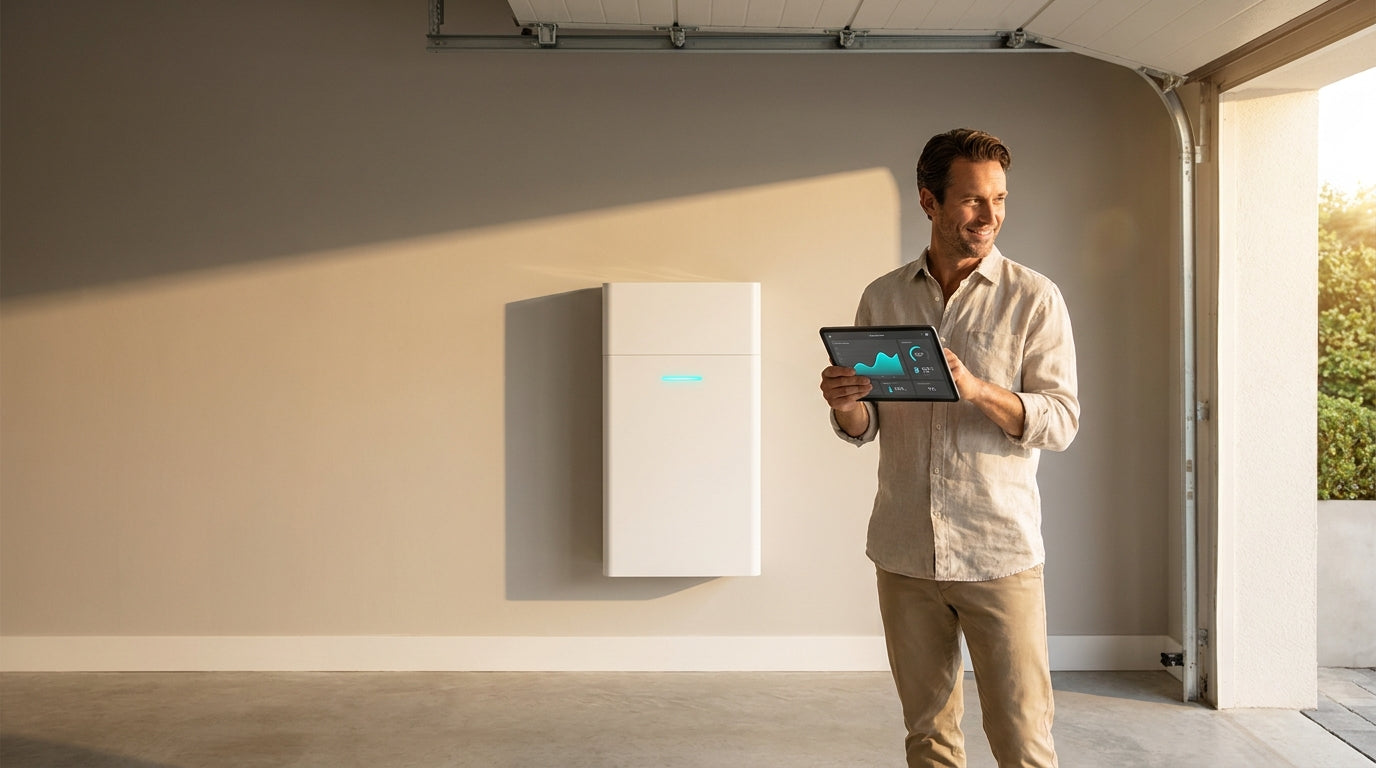
Kora's Powerblocks (LFP), Smart Panel, and Power App sit in exactly that design space, framed not as the only option but as increasingly what every reputable 2026 setup looks like. A battery stores energy. Kora makes it usable, and watchable, at the right moment.
A battery stores energy. Kora makes it usable, and watchable, at the right moment.
So what for you? Safety in 2026 is not a single feature you can buy; it is a system property. The chemistry, the certification, the BMS, and the install have to line up, and the cleanest way to get all four is to treat them as one integrated decision rather than four separate purchases.

The Bottom Line
A 10,500-unit recall sounds alarming, but set against millions of US installs, a largely complete shift to safer chemistry, and a 2026 update to the key thermal-runaway test, it reads as a clean-up of an older cohort rather than a category problem [1][4][6]. The useful response is calm and concrete: confirm your battery is not recalled, understand chemistry when you shop, ask for UL 9540 and UL 9540A references, and hire an NFPA 855-fluent installer.
This is general safety education, not regulatory or engineering advice. For concerns about your specific equipment, consult your installer, your local authority having jurisdiction (AHJ), or the manufacturer, and never attempt repair, discharge, or panel work yourself.
Want chemistry, certification, BMS, and install handled as one integrated home energy system? Explore the Kora Founders Edition (Powerblocks LFP, Smart Panel, and Power App) and see how it fits your home.
Frequently Asked Questions
How many Powerwall 2 units were recalled in 2026?
Tesla recalled roughly 10,500 Powerwall 2 units in the US, all installed between November 2020 and December 2022, after the CPSC tied incidents to specific third-party cells (verified as of 2026-06-18) [1][6]. The CPSC documented 22 reports (5 fires, 6 smoke, 11 overheating), with minor property damage and no deaths.
Is my Powerwall 3 part of the recall?
No. The 2026 recall covers only the Tesla Powerwall 2, sold from 2020 to 2022 (verified as of 2026-06-18) [1]. The Tesla Powerwall 3, launched in 2024, uses LFP chemistry and is not included in the recall. If you own a Powerwall 3, no recall action is required, though normal monitoring still applies.
Are LFP home batteries actually safer than NMC?
Materially yes, and the difference is data-backed. LFP begins thermal runaway around 270 to 300 C versus 150 to 210 C for NMC, and LFP releases no oxygen during a failure while NMC does [7]. Modern NMC remains safe in proper installs, but LFP is the 2026 residential default for exactly these reasons.
What is UL 9540 and why does it matter?
UL 9540 is the system-level safety listing that evaluates a home battery's hardware and software as one product, and the 2024 and 2026 IRC and IFC require it for residential installs (verified as of 2026-06-18) [3]. Its companion test, UL 9540A, reached its 6th Edition on March 13, 2026, adding large-scale fire testing [3][4].
Should I get rid of my home battery because of the recall?
Not unless your specific unit is on an open recall. If you own a Tesla Powerwall 2 installed between 2020 and 2022, check the Tesla app and contact your installer (verified as of 2026-06-18) [1][2]. For every other battery, no action is required beyond normal monitoring; a recall headline is not a verdict on your unit.
How can I check if my battery has been recalled?
Find your model and serial number on the nameplate, then check the manufacturer's safety page, the manufacturer app, and the CPSC recall database at cpsc.gov/Recalls (verified as of 2026-06-18) [1]. If anything is ambiguous, contact your original installer. The process takes about ten minutes and gives a clear yes-or-no.
References
- U.S. Consumer Product Safety Commission, "Tesla Recalls Powerwall 2 AC Battery Power Systems Due to Fire and Burn Hazards." https://www.cpsc.gov/Recalls/2026/Tesla-Recalls-Powerwall-2-AC-Battery-Power-Systems-Due-to-Fire-and-Burn-Hazards-Risk-of-Serious-Injury-or-Death ↩
- Tesla Support, "Powerwall." https://www.tesla.com/support/energy/powerwall ↩
- UL Solutions, "UL 9540A Test Method." https://www.ul.com/services/ul-9540a-test-method ↩
- Intertek, "Understanding the 2026 Update to UL 9540A." https://www.intertek.com/blog/2026/03-23-understanding-the-2026-update-to-ul-9540a/ ↩
- NFPA, "NFPA 855: Standard for the Installation of Stationary Energy Storage Systems." https://www.nfpa.org/codes-and-standards/all-codes-and-standards/list-of-codes-and-standards/detail?code=855 ↩
- TechCrunch, "Tesla Powerwall 2 recall expands to US after reports of fires." https://techcrunch.com/2025/11/13/tesla-powerwall-2-recall-expands-to-us-after-reports-of-fires/ ↩
- Schöberl, J., Ank, M., Schreiber, M., Wassiliadis, N., & Lienkamp, M., "Thermal runaway propagation in automotive lithium-ion batteries with NMC-811 and LFP cathodes: Safety requirements and impact on system integration," eTransportation, Vol. 19, Article 100305 (2024). https://doi.org/10.1016/j.etran.2023.100305 ↩
Note: LFP/NMC chemistry figures (trigger temperatures, oxygen release, peak temperatures, mass ejected, cycle life) are drawn from peer-reviewed battery-chemistry testing literature. Source: [7].

Share:
Home Battery vs. Generator: The Complete 2026 Buyer's Guide
Can Your EV Power Your House? The Honest 2026 Guide to V2H